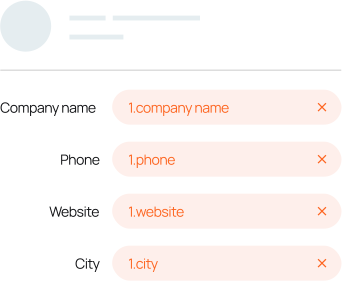
Have you ever wished that there was an easier way to keep track of all the files you have created in Uploadcare? Well, using this Uploadcare - Uploadcare integration, you can create a card for each file in Trello and never lose track of a thing.
You can even color code your card to help organize them even further. This is a great way to stay on top of your projects, and it'll help you be more productive. Plus, this automation makes collaboration a breeze because it lets everyone know exactly where each file is stored.
If you work in a team environment, you're probably already familiar with Trello. It's a great way to communicate with your team members quickly and easily.
But did you know that you can also use Trello to notify you when specific file are created in Uploadcare? It's a great way to keep track of your project files without having to constantly check your email inbox.
Use this automation to set up this notification system using Slack and Uploadcare. Let's get started!
One of the most popular ways to manage projects is by using Trello. It's a great way to visually see what is going on with a project and it's easy to use. In addition, you can attach files to cards in Trello. This can be really helpful if you need to keep track of documents or other files related to the project.
However, what happens if you want to store those files in Uploadcare instead of Trello? Can you still link the two together? The answer is yes!
This Trello - Uploadcare integration will allow you to create a link between the two. Any time an attachment is added in Trello, it will be created in Uploadcare as well.
You Can Also Connect Trello or Uploadcare With 1400+ Other Apps
Trello
Trello is the visual collaboration platform that gives teams perspective on projects. Use it to keep track of everything from a simple project checklist to a complex workflow, and get instant notification of changes.
Uploadcare is file management platform and a CDN for user-generated content. It is a robust file API for uploading, managing, processing, rendering, optimizing, and delivering users’ content.